



Martingale Betting: A Comprehensive Guide to the System
🗝️ Key Takeaways
- Discover how the Martingale works: double your stake after every loss and return to your base bet after a win.
- Follow a worked bankroll table that shows how a £100 budget at £1 a spin runs dry after just six losses.
- See why a six-loss streak is far more likely than it feels, with about an 84% chance in 200 European roulette spins.
- Compare the main variants, from the Grand Martingale to the Anti-Martingale, and what each one changes.
- Learn why roulette rules like La Partage help more than any staking plan, and why blackjack pushes complicate the maths.
- Understand why no betting system can beat the house edge, however the stakes are arranged.
The Martingale is the best-known betting system in the casino, and it sounds almost foolproof. Keep doubling after every loss, and the first win wipes out the losing run and leaves you one unit ahead.
The catch is that losing runs can last longer than any bankroll or table limit allows. This guide explains how the system works, runs the numbers in a worked table, covers the main variants and shows why no system changes the house edge.
🎲 How the Martingale Works
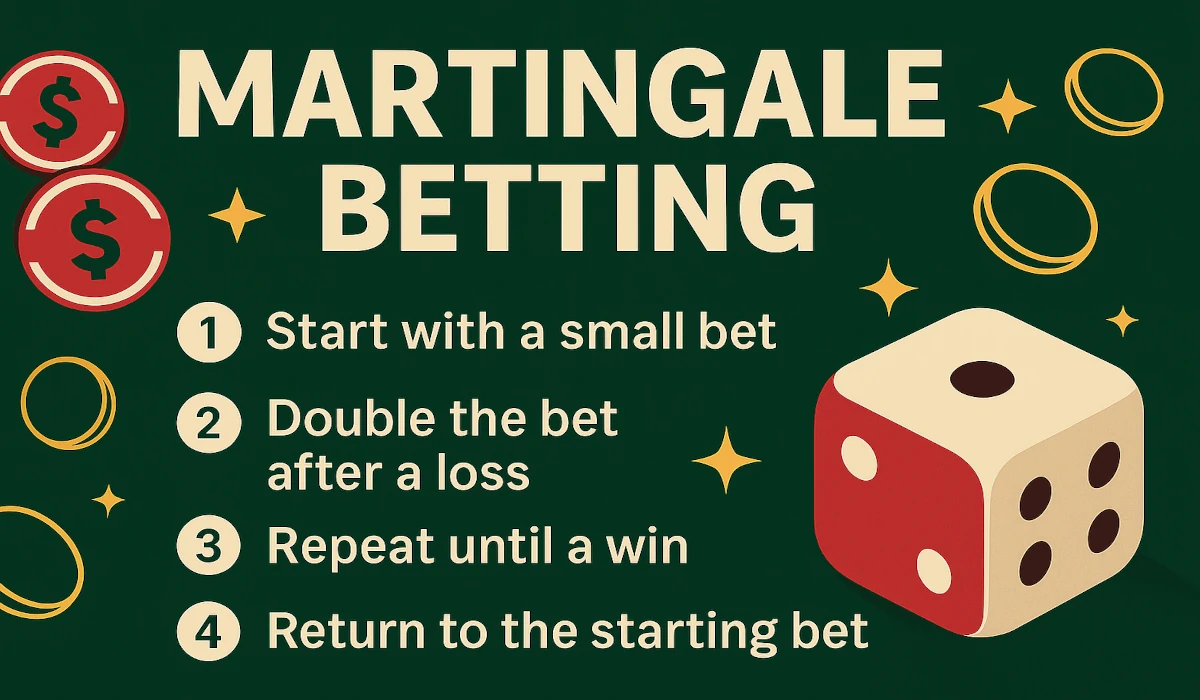
The Martingale is a negative progression, meaning your stake rises after a loss. It is normally used on even-money bets, such as red or black in roulette.
- Choose a base stake, for example £1.
- If the bet wins, take your £1 profit and bet £1 again.
- If it loses, double it for your next bet: £2, then £4, then £8.
- When a bet finally wins, the payout covers every loss in the run plus £1, and you go back to £1.
Say you lose at £1, £2 and £4, a total of £7, and then win at £8. The £8 win covers the £7 you lost and leaves you £1 up.
That is all the system does. It changes the size of your bets, but not the odds on any of them.
📊 A Worked Bankroll Table
Here is how a £1 Martingale grows through a losing run. The last column shows the total you have lost before the next bet.
| Losses in a row | Next stake | Total lost so far | Profit if the next bet wins |
| 0 | £1 | £0 | £1 |
| 1 | £2 | £1 | £1 |
| 2 | £4 | £3 | £1 |
| 3 | £8 | £7 | £1 |
| 4 | £16 | £15 | £1 |
| 5 | £32 | £31 | £1 |
| 6 | £64 | £63 | £1 |
| 10 | £1,024 | £1,023 | £1 |
| 16 | £65,536 | £65,535 | £1 |
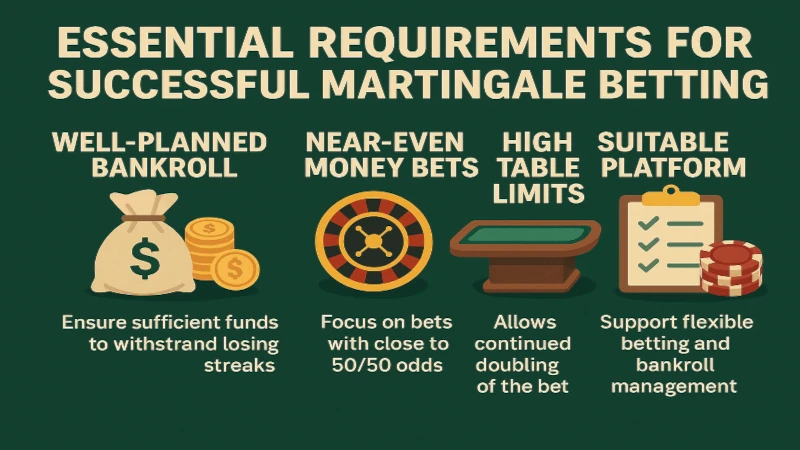
With a £100 bankroll, the system runs out after 6 losses. You have lost £63, and the next stake of £64 is more than the £37 you have left.
To survive 16 losses in a row from a £1 base bet, you would need £65,535. All of that money is risked to win a single pound, and most tables would stop you well before then with their maximum bet.
🔥 Why Losing Streaks Break the System
A red or black bet in European roulette loses 19 times out of 37, because the zero counts against you. A run of six straight losses turns up about once in every 55 attempts, which can sound rare.
Over a session, though, the chances add up quickly. The chance of six losses in a row at some point in 200 European roulette spins is about 84%, so a £100 bankroll at £1 a spin will usually be wiped out within a single session.
The maths behind that is simple. Each Martingale run either wins £1 or, about 1.8% of the time, loses £63, and the rare £63 loss outweighs all the small wins on average.
When you add it up, you lose about 2.7% of everything you stake, exactly the same as European roulette's normal house edge. The Martingale doubles the stake after each loss but does not change the house edge, however long you keep doubling.
🎰 Roulette and Blackjack
🔴 Roulette
Even-money roulette bets are where most players try the Martingale, and the version of the game matters more than the system. European roulette has a house edge of 2.7%, while American roulette, with its extra double zero, has 5.26%.
French roulette often adds one of two rules for even-money bets when the ball lands on zero. La Partage returns half your stake, and En Prison holds the stake for the next spin, and both cut the house edge to 1.35%.
Those rules lower the cost of every bet you make, which no staking plan can do. They still leave the house with an edge, so a long enough losing run ends a Martingale at a French table too.
🃏 Blackjack
Blackjack is a poor fit for the Martingale. A hand wins about 42.4% of the time, loses 49.1% and pushes 8.5%, so you lose noticeably more often than you win.
Doubles and splits make it messier still, because your stake on a single hand can grow mid-round and push the next doubled bet beyond the plan. The blackjack cheat sheet on our site shows where those plays come from.
🔄 Martingale Variants
Several versions of the Martingale change the size of the steps or the direction of the progression. None of them changes the odds of the bets underneath.
- Grand Martingale: after a loss, you double the stake and add one more unit, so £1 becomes £3, then £7. A win brings a bigger profit, but the stakes climb even faster than in the classic version.
- Mini or Limited Martingale: you set a maximum number of doublings in advance, then accept the loss and start again. It caps the damage of each run, but turns every capped run into a guaranteed loss.
- Anti-Martingale (Reverse Martingale): you double after a win and drop back to the base stake after a loss. Losing runs cost little, but a single loss wipes out the profit from a winning streak.
- Odds-based Martingale: used in sports betting at odds other than 2.0, where the next stake is calculated to recover losses plus a target profit. The stakes still climb after every loss, just at a different rate.
⚖️ Betting Both Sides
Some systems suggest backing every outcome of a market at once, such as over and under on the same total. Betting both sides of a bet always loses the bookmaker's margin.
At odds of 1.90 on each side, £10 on both returns £19 from the winning bet, so you lose £1 on every £20 staked whatever happens. Doubling those stakes after a loss only makes the guaranteed loss bigger.
🧮 Why No System Beats the House Edge
Every casino bet has a fixed expected loss built into its odds. A betting system only decides how much you stake on each bet, and the casino's edge is charged on all of it.
The Martingale reshapes your results rather than improving them. It produces many small wins and a few very large losses, and over time those losses add up to the same edge you would face betting a flat £1.
The only real ways to lower the cost of play are choosing better games and better rules, such as European or French roulette over American. Setting a firm budget and a time limit before you start protects your money far better than any staking pattern.
🌟 VistaGamble's Honest Assessment
The Martingale is easy to follow, which is exactly why so many players trust it. Below, we weigh up its strengths and its limits.
➕ The Positives
- Simple rules: one instruction, double after a loss, makes it easy to follow at the table.
- Frequent small wins: most runs end with a one-unit profit, which can make a session feel steady.
- Clear structure: knowing your next stake in advance takes guesswork out of bet sizing.
➖ The Negatives
- No effect on the house edge: you lose the same percentage of your stakes as with flat betting.
- Huge risk for tiny rewards: a £100 bankroll is put on the line to win £1 at a time.
- Table limits end the run: maximum bets stop the doubling long before a long losing streak is over.
🔒 Conclusion
The Martingale doubles your stake after each loss and promises one unit of profit from every losing run. In practice, a £100 budget on £1 bets survives only six losses, and a six-loss streak turns up in about 84% of 200-spin roulette sessions.
No variant changes the house edge, and betting both sides only locks in the bookmaker's margin. If you play roulette, the French table and its La Partage or En Prison rule will do more for you than any system, and a fixed budget will do more still.
Frequently Asked Questions❓
Does the Martingale system work?
It wins small amounts often but loses large amounts when a long losing streak arrives. Over time, it does not change the house edge, so it cannot make you a winner.
How much bankroll do you need for the Martingale?
From a £1 base bet, you need £65,535 to survive 16 losses in a row. A £100 bankroll runs out after just 6 losses.
How likely is a losing streak with the Martingale?
In 200 spins of European roulette, there is about an 84% chance of six losses in a row at some point. That is enough to wipe out a £100 bankroll on £1 bets.
Is the Martingale illegal in casinos?
No, using the Martingale is legal, and casinos allow it. Their table limits cap how far you can double, and the house edge stays the same whatever system you use.
What is the best roulette game for the Martingale?
French roulette with La Partage or En Prison has the lowest house edge on even-money bets, at 1.35%. The rule lowers the cost of play, but the system still cannot beat the edge.
Can you use the Martingale in blackjack?
You can, but a hand wins only about 42.4% of the time, with 49.1% losses and 8.5% pushes. Doubles and splits also make stakes jump unpredictably, which adds to the risk.